3.7G Parking and intersection visibility
Search Content
Download PDF
Introduction
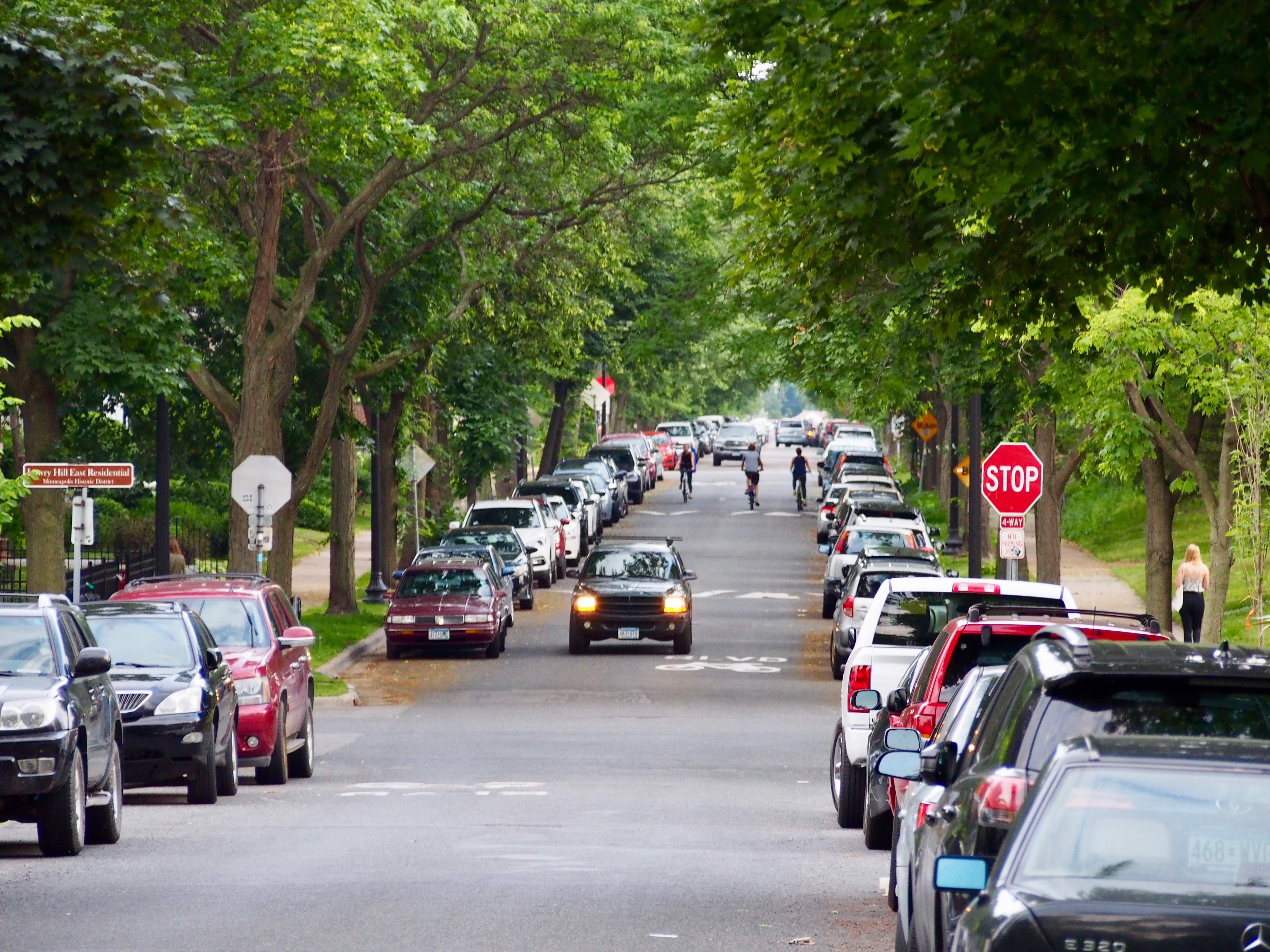
Visibility at intersections is important for safety. Visibility can be impeded by parked vehicles near the intersection, so it is important to effectively manage parking near intersections. Minneapolis ordinance prohibits on‐street parking in locations that would impact visibility, cause a safety risk, or limit access.
There are existing signed parking spots that do not align with the general parking prohibitions in City ordinance. In high parking demand areas, it is also fairly common for people to violate parking restrictions if there is not a physical barrier (like a curb extension) that limits the feasibility of parking.
This guidance defines the City’s approach to parking near intersections and procedures around changes to parking.
general parking restrictions
In accordance with City ordinance and to support visibility, safety, and access, parking should generally not be allowed:
- within 30’ of a signal;
- within 30’ of a stop sign if there is not a concrete curb extension;
- If there is a 6’ wide concrete curb extension, parking should be restricted within at least 18’ of a stop sign.
Figure 3.7G.1:
Minimum parking restriction distance to a stop sign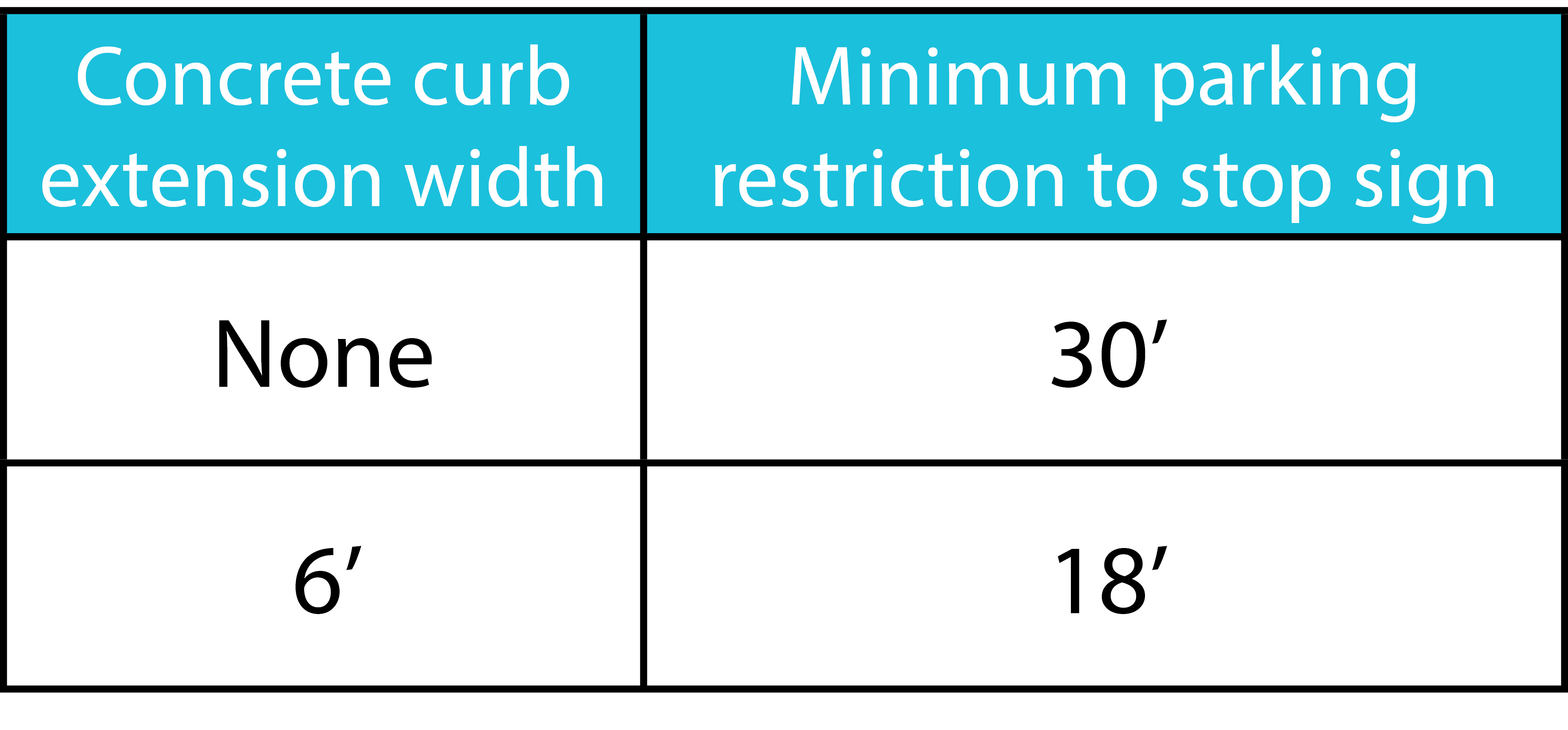
- within 20’ of a marked or unmarked crosswalk at intersection;
- On the far side of one-way streets, shorter parking restrictions can be considered because there are not visibility benefits. Parking should always be prohibited within 5’ of a crosswalk.
- On the far side of two-way streets, shorter parking restrictions may be considered depending on the situation. General considerations for far-side parking restrictions on 2-way streets include:
- Unsignalized intersections on two-lane two-way streets should generally still restrict parking within 20’ of a far-side crosswalk.
- A concrete curb extension allows for slightly shorter far-side parking restrictions although a minimum 3:1 taper must be maintained for curb extensions.
- Signalized intersections may allow for shorter far-side parking restrictions, but typically parking should be restricted within 10’ of the far-side of a signalized 2-way street.
- Intersections with pedestrian refuge islands allow for shorter far-side parking restrictions. Parking should always be prohibited within 5’ of a crosswalk.
- within 20’ of a marked midblock crosswalk;
- within 5’ of an alleyway or driveway;
- within 10’ of a fire hydrant (except for established taxicab stands);
- within a marked bus stop;
- within 50’ of a railroad crossing; and
- within 20’ of a fire station driveway and within 75’ of a fire station driveway on the side of the street opposite to the entrance (when signed).
For unique circumstances, see NACTO Visibility/Sight Distance guidance to help inform parking restrictions near intersections.
Figure 3.7G.2:
General parking restrictions for signalized intersections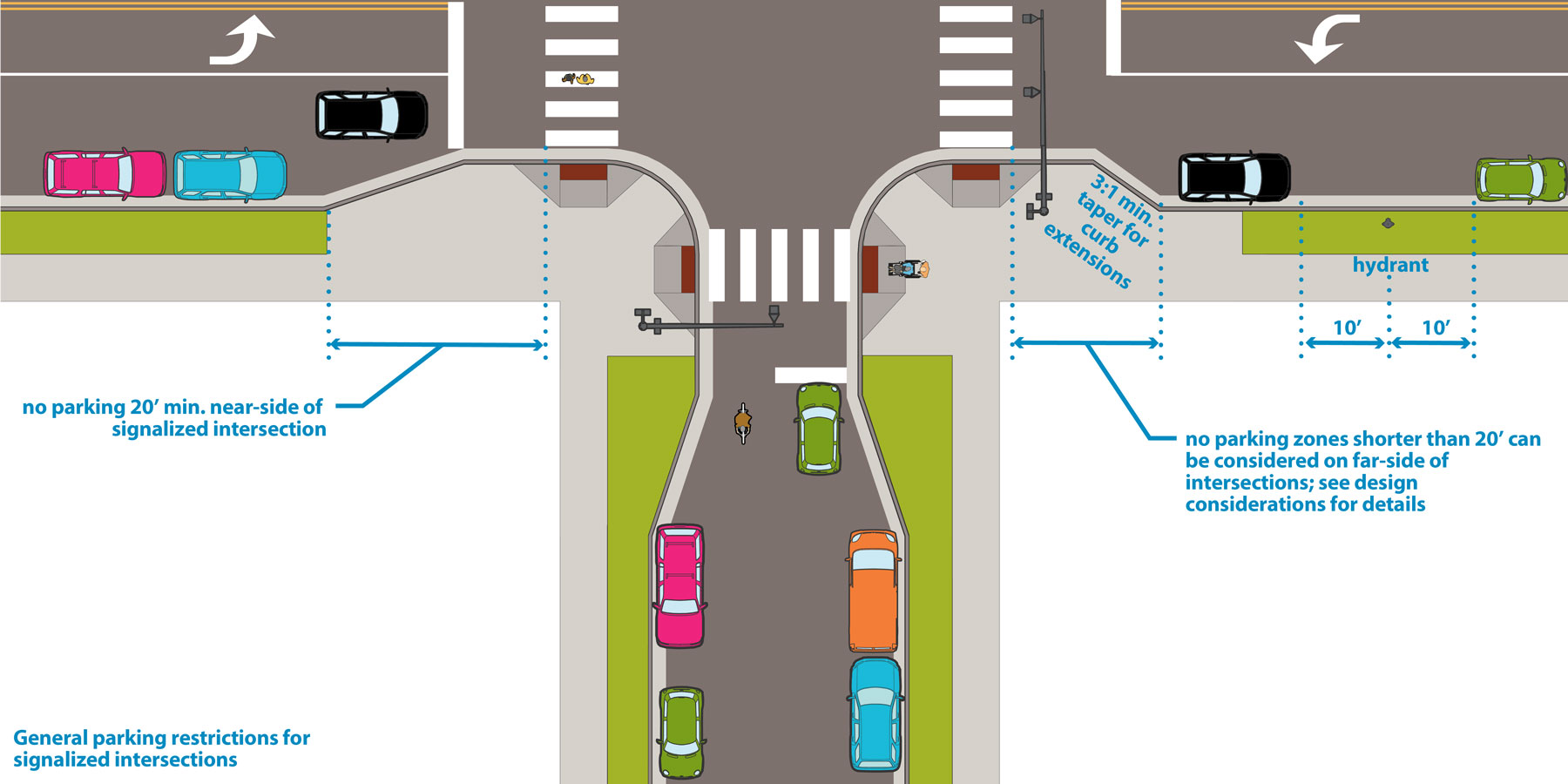
Figure 3.7G.3:
General parking restrictions for unsignalized intersections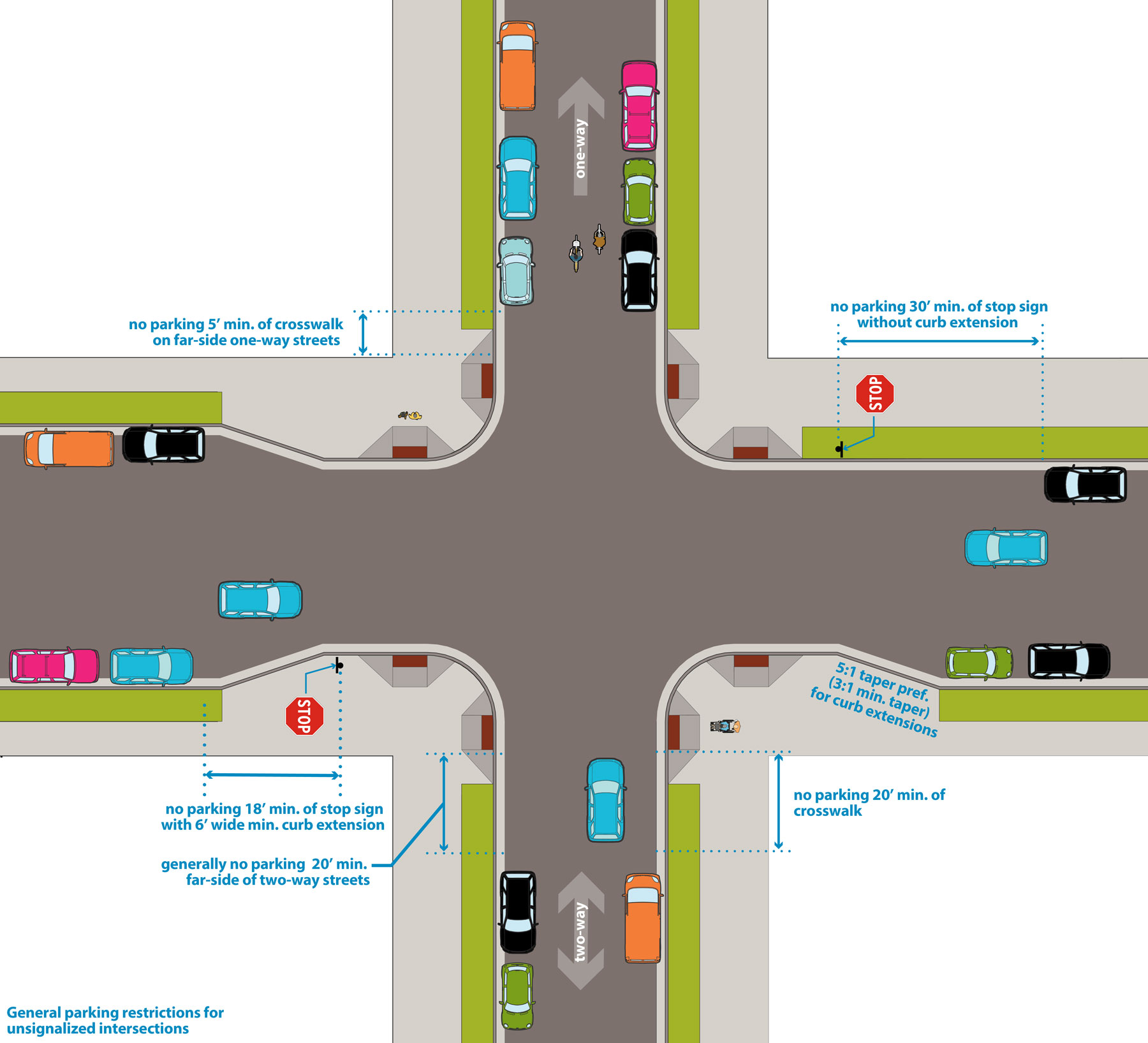
Guidance for street reconstruction projects
- Street reconstruction projects should be designed to restrict parking in the areas mentioned above unless there is a specific unique circumstance that means allowing parking will not impact visibility, safety, or access.
- Curb extensions or other physical treatments should generally be included near an intersection if there is full-time on-street parking on the street leading up to the intersection to reduce the likelihood that someone illegally parks in an area that would limit visibility or access.
- In areas with metered parking, designers should discuss the available parking area with parking staff to ensure that curb extensions match well with spacing for metered parking. The exact length of curb extensions should be set to avoid leaving extra space beyond the metered parking that might attract illegal parking.
- In higher parking demand areas, no parking signage should be used to augment curb extensions.
Procedures outside of street reconstruction projects
- Public Works is generally working toward achieving a system that restricts parking in the locations outlined in the above general parking restrictions. New parking spaces will not be created in locations outlined in those restrictions.
- In cases where parking is currently allowed in a restricted area listed above, Public Works will consider adjustments to existing parking regulations in coordination with safety-focused projects or in response to community requests.
- In coordination with a safety-focused project, parking adjustments will generally be made to align with the above general parking restrictions. Staff will generally not remove a parking space if existing conditions are close to meeting the restrictions above or if a specific unique circumstance means the parking does not impact visibility, safety, or access.
- When there are community requests for parking changes, staff will evaluate the circumstances and determine if a signage or other change is warranted. Any adjustments would generally be in line with the above general parking restrictions. Adjustments would be prioritized for requests on High Injury Streets or locations with significant crash history.
- When a parking space is removed in an area with parking meters or high parking demand, a physical barrier such as concrete or delineator curb extension should be used to limit illegal parking.
- In areas where parking is well utilized or there is metered parking, staff will provide written notice of parking changes to all properties within 100’ of the impacted spot.
- When a permanent change is made to parking, staff will document the change with a To the Record letter.